

Volume 13, Issue 2 (Spring 2026)
JROS 2026, 13(2): 35-42 |
Back to browse issues page




Download citation:
BibTeX | RIS | EndNote | Medlars | ProCite | Reference Manager | RefWorks
Send citation to:


BibTeX | RIS | EndNote | Medlars | ProCite | Reference Manager | RefWorks
Send citation to:
Tabrizian P, Nakhaei Amroodi M, Bahaeddini M, Hashemipour B, Safaei F, Khajeh Alizadeh Attar M et al . Long-term Clinical Outcomes of Terrible Triad of the Shoulder: A 14-year Retrospective Study. JROS 2026; 13 (2) :35-42
URL: http://jros.iums.ac.ir/article-1-2321-en.html
URL: http://jros.iums.ac.ir/article-1-2321-en.html
Pouria Tabrizian1 

 , Morteza Nakhaei Amroodi1 , Mohammadreza Bahaeddini1 , Babak Hashemipour1 , Fateme Safaei1 , Mojtaba Khajeh Alizadeh Attar1 , Mohammadmehdi Mahdavifar1
, Morteza Nakhaei Amroodi1 , Mohammadreza Bahaeddini1 , Babak Hashemipour1 , Fateme Safaei1 , Mojtaba Khajeh Alizadeh Attar1 , Mohammadmehdi Mahdavifar1
1- Bone and Joint Reconstruction Research Center, School of Medicine, ShafaYahyaeian Hospital, Iran University of Medical Sciences, Tehran, Iran.
Keywords: Terrible triad of the shoulder, Shoulder dislocation, Rotator cuff (RC) tear, Axillary nerve injury, Functional outcome, Range of motion (ROM), Electromyography (EMG)
Full-Text [PDF 590 kb]
(61 Downloads)
| Abstract (HTML) (653 Views)
Full-Text: (39 Views)
Introduction
The terrible triad of the shoulder is a complex and rare injury defined as traumatic anterior shoulder dislocation associated with rotator cuff (RC) tear and axillary nerve injury [1]. This complex injury pattern jeopardizes all major functional components of the shoulder, leading to substantial impairment if not promptly recognized and appropriately managed. The entity was first described by Gonzalez et al. in 1991 [2]. Subsequently, Güven et al. reported a similar case in 1994 and referred to it as the “unhappy triad of the shoulder” [3]. The term “terrible triad of the shoulder” was later introduced by Groh and Rockwood in 1995, further emphasizing the severity and clinical importance of this condition [4].
Overall, this injury remains relatively rare but clinically significant due to its multifaceted nature. However, alternative patterns have also been reported, including associated injuries such as radial nerve involvement or fractures of the greater tuberosity of the humerus. These variations have been incorporated into classification systems, such as the one proposed by Marsalli et al. which highlights the heterogeneity of this condition [4]. Given the complexity of this pattern, orthopedic surgeons must pay particular attention to the risk of recurrent shoulder instability, which may complicate both diagnosis and treatment [1].
Among the components of this triad, axillary nerve injury plays a crucial role in functional outcomes. The axillary nerve innervates the deltoid muscle and is essential for shoulder abduction and external rotation. Injury to this nerve may occur during traumatic dislocation or direct shoulder trauma [5]. Clinically, patients may present with numbness or paresthesia over the deltoid region, weakness in shoulder abduction and external rotation, and muscle atrophy in chronic cases. Diagnosis relies on a combination of physical examination focusing on motor and sensory deficits, and electrodiagnostic studies, such as electromyography (EMG), to assess nerve function [6, 7].
Another key component of the triad is shoulder dislocation, which occurs when the humeral head is forcibly displaced from the glenoid cavity [8]. Anterior dislocations are the most common type. Clinical manifestations include severe pain, inability to move the shoulder, visible deformity (often described as a squared-off appearance), swelling, and ecchymosis. Diagnosis is typically confirmed through physical examination and radiographic imaging, which also helps identify associated fractures [9, 10].
When these three injuries occur simultaneously, the clinical scenario becomes significantly more complex, necessitating a comprehensive and multidisciplinary treatment approach. Initial management typically involves closed reduction of the dislocated shoulder followed by immobilization to facilitate early healing. Rehabilitation through physiotherapy is subsequently initiated to restore range of motion (ROM) and muscular strength. Surgical interventions may be required depending on the severity and combination of injuries. Surgical repair of the RC is frequently advocated, whereas axillary nerve injuries are often managed conservatively due to their potential for spontaneous recovery. However, the interplay between these injuries complicates decision-making and may influence long-term outcomes [4].
This study aimed to evaluate clinical and functional outcomes in patients with the terrible triad of the shoulder and identify factors associated with recovery. Specifically, we assessed pain, ROM, fatigue, and nerve recovery over time to provide insight into optimal management strategies for this challenging condition. These data are collected and analyzed both quantitatively and qualitatively to provide clinically relevant insights for healthcare professionals managing this challenging condition.
Methods
This retrospective cohort study included 50 patients with shoulder dislocation associated with RC tear and axillary nerve injury between 2011 and 2024.
Inclusion and exclusion criteria
The inclusion criteria included patients aged between 18 and 80 years with a confirmed diagnosis based on clinical, radiological, and electrophysiological findings. The exclusion criteria included patients with congenital neuromuscular disorders, a history of prior surgery on the affected shoulder, underlying psychotic or neurological disorders that could interfere with assessment, and those who were unable or unwilling to complete the follow-up period. Data were collected from medical records and follow-up evaluations to assess treatment outcomes. Outcome measures included: Pain severity was assessed using the visual analog scale (VAS) at 6 months.
Shoulder ROM was assessed using a goniometer and standardized physical examination techniques at 6 and 18 months.
Fatigue severity was assessed using the fatigue severity scale (FSS) at ≥18 months. Nerve recovery was evaluated both clinically and electrophysiologically. Clinical nerve recovery was categorized based on motor function and shoulder abduction:
Complete recovery: Medical research council (MRC) grade 5 and abduction >90°; Partial recovery: MRC grade 3–4 and abduction 30–90°; No recovery: MRC ≤2 and abduction <30°.
Data were analyzed using SPSS software, version 26. Continuous variables were reported as Mean±SD, and categorical variables as frequencies and percentages. Group comparisons were performed using independent t-tests and chi-square tests. Correlations between variables were assessed using Pearson correlation coefficients. A P<0.05 was considered statistically significant. Written informed consent was obtained from all participants for the use of their clinical data.
Results
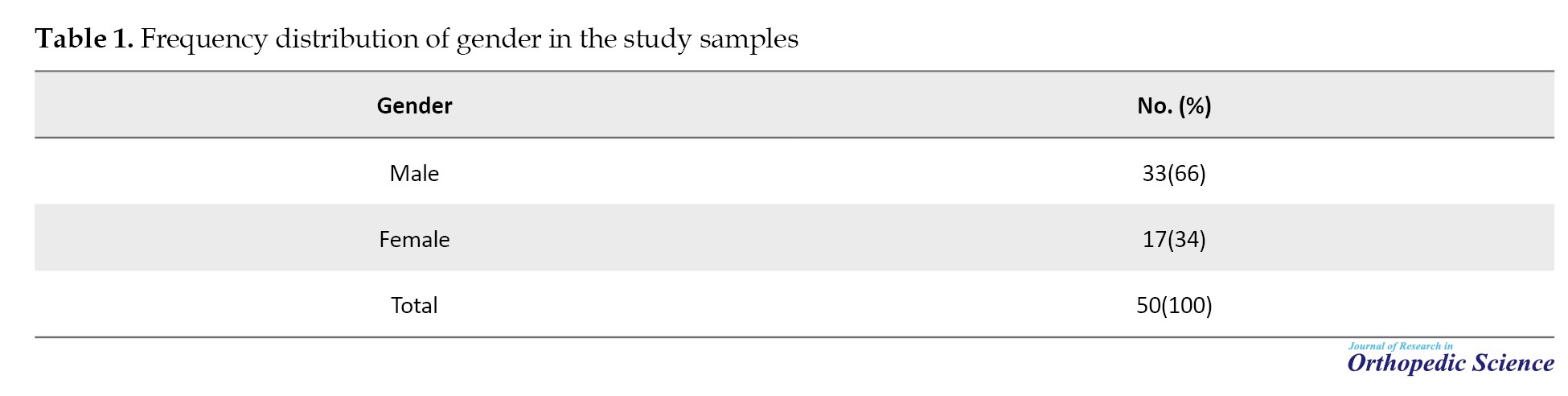
A total of 50 patients were included, comprising 33 men (66%) and 17 women (34%), with a mean age of 54.1±8.6 years (Tables 1 and 2).
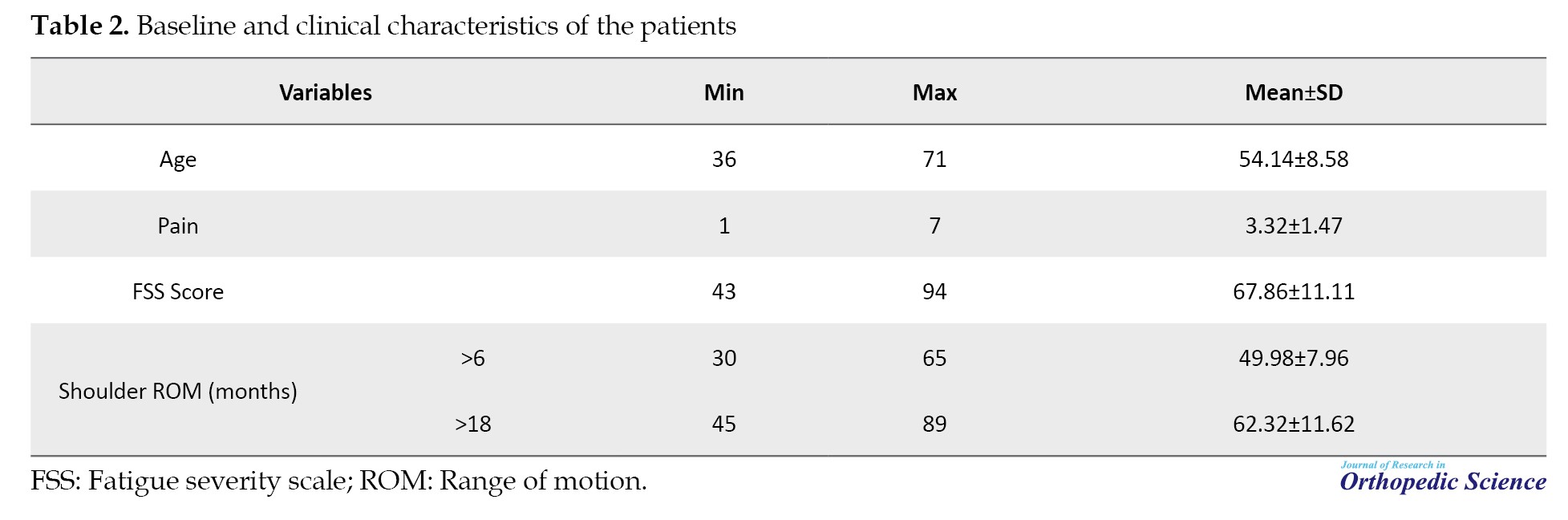
The mean VAS pain score at 6 months was 3.32±1.47, with reported values ranging from 1 to 7 (Table 2). Female patients reported significantly higher pain scores than males (4.53±1.46 vs 2.70±1.55, P<0.001).
The mean FSS score at final follow-up was 67.86±11.11, with a range between 43 and 94, indicating moderate to severe fatigue. Male patients demonstrated significantly higher fatigue scores (Table 2).
Assessment of shoulder ROM demonstrated a significant improvement over time. The mean ROM at 6 months was 49.98±7.96°, which increased to 62.32±11.62° at 18 months, reflecting a statistically significant functional recovery (P<0.001) (Table 2).
Clinical evaluation of nerve recovery revealed complete recovery in 18 patients (36%), partial recovery in 20(40%), and no recovery in 12(24%). Overall, 76% of patients experienced some degree of nerve function recovery (Table 3).
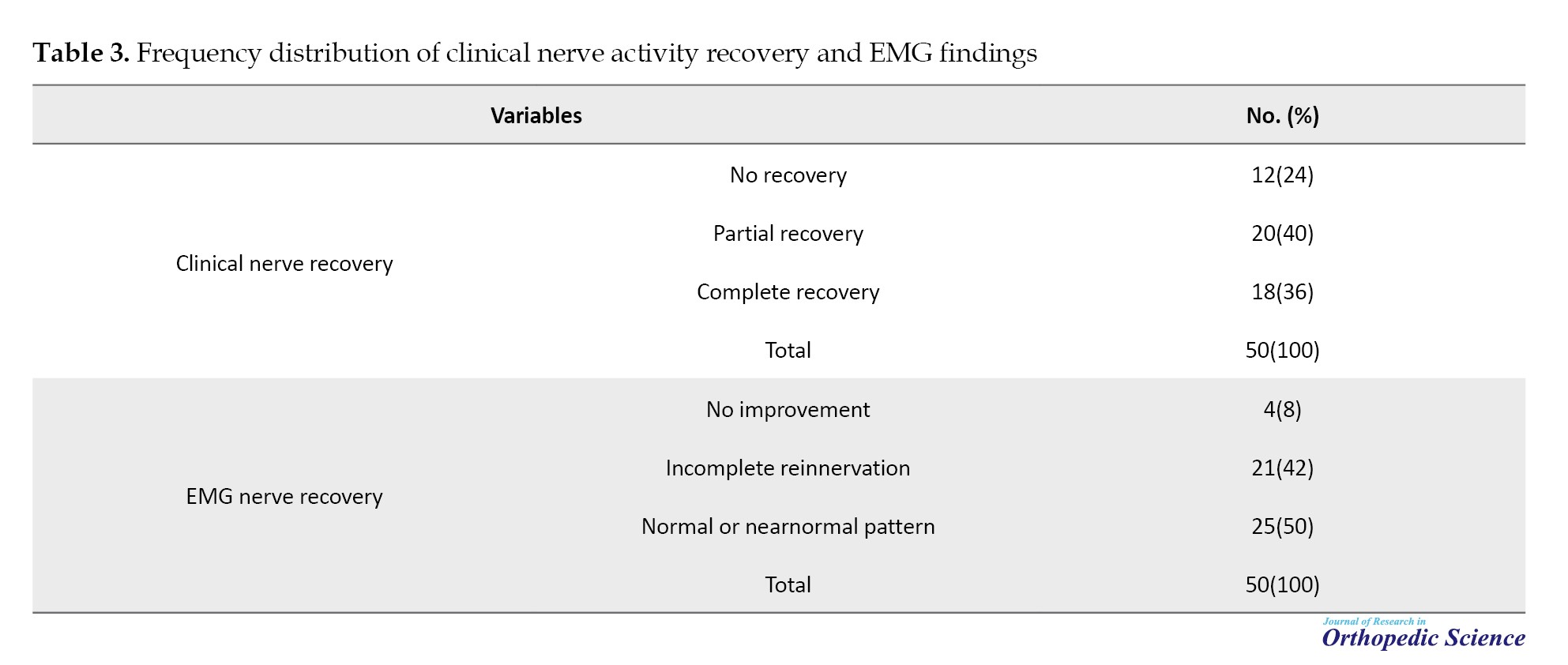
Electrophysiological findings based on EMG assessments showed normal or near-normal patterns in 25 patients (50%), evidence of incomplete reinnervation in 21 patients (42%), and no detectable improvement in 4 patients (8%). In total, 92% of patients demonstrated some degree of electrophysiological recovery during follow-up (Table 3).
Age was significantly positively correlated with pain (r=0.434, P=0.002) and negatively correlated with ROM (r=-0.613, P<0.001).
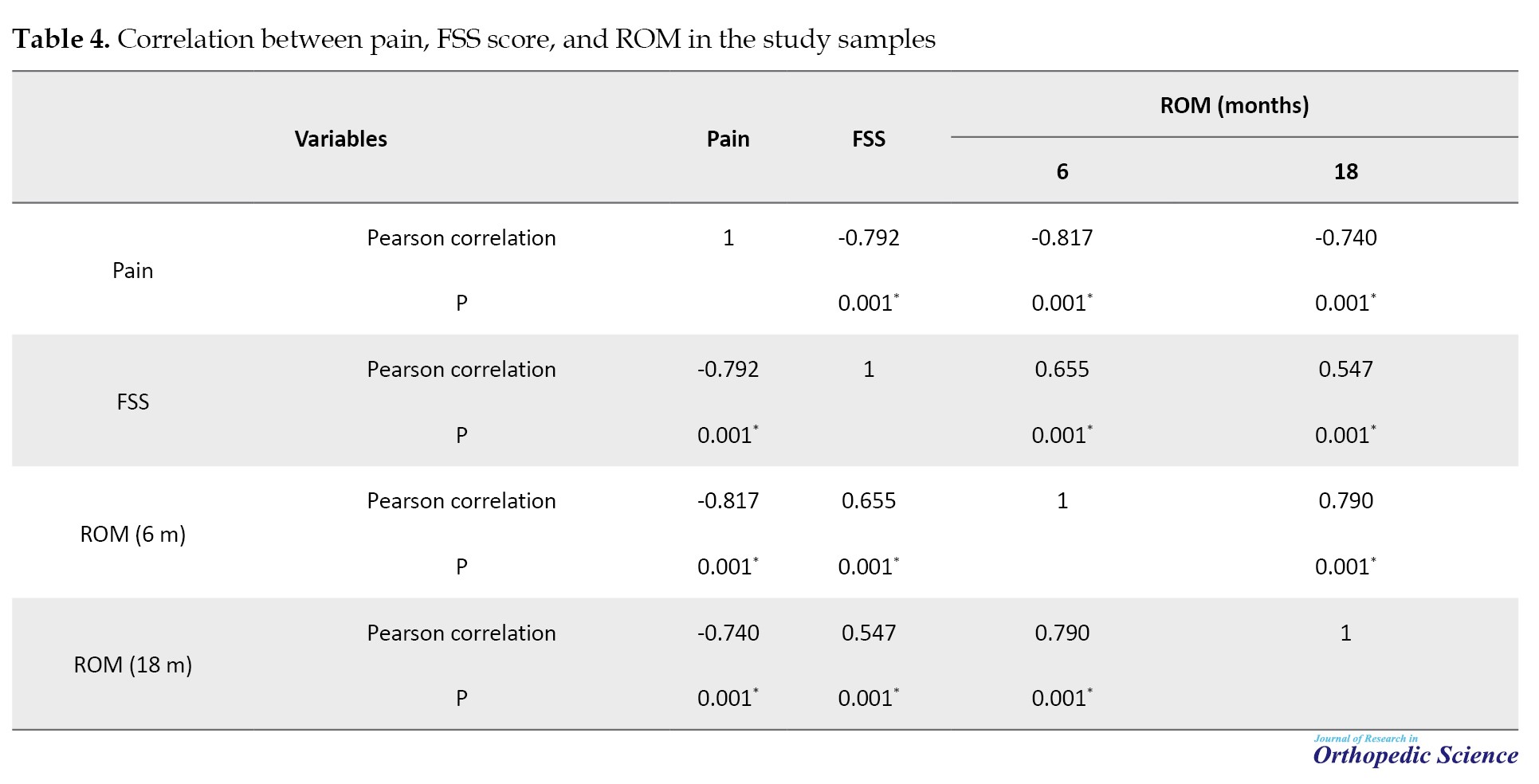
Pain demonstrated strong negative correlations with ROM at both 6 months (r=-0.817) and 18 months (r=-0.740), indicating that improved mobility was associated with reduced pain. A significant correlation was also observed between ROM at 6 and 18 months (r=0.790, P<0.001), suggesting consistency in recovery trajectory (Table 4).
Discussion
This study evaluated clinical and functional outcomes in patients with the terrible triad of the shoulder and identified key factors influencing recovery. The findings highlight the complex interplay between structural injury, neurological impairment, and patient-related factors, such as age and sex. Although precise epidemiological data for this condition in the United States are lacking, the overall incidence of shoulder dislocation has been reported at approximately 23.9 cases per 100,000 person-years [11]. The proportion of patients developing the terrible triad of the shoulder remains variable. Data from a traumatology center in Ukraine demonstrated that 28 out of 492 patients (5.7%) with shoulder dislocation were diagnosed with this triad [12]. Other reports have estimated a broader prevalence ranging from 9% to 18% [13], while more recent systematic reviews suggest a range of 2% to 18% [14]. These discrepancies likely reflect differences in study populations, diagnostic criteria, and reporting methods. Notably, the lack of comprehensive epidemiological data across different regions, including Europe, Asia, and Iran, underscores the rarity of this condition and the predominance of case reports and small case series in the literature.
A key finding emphasized across studies is the importance of recognizing concomitant injuries in patients with shoulder trauma. Peripheral nerve injury is a critical but sometimes underdiagnosed component. In patients presenting with neurological deficits following shoulder dislocation, associated RC tears should be carefully evaluated for potential sources of persistent pain or weakness. Conversely, patients diagnosed with RC tears after dislocation may have an unrecognized peripheral nerve injury [15]. This highlights the necessity of a comprehensive diagnostic approach in such complex injuries.
One of the principal observations of this study is the relatively high rate of nerve recovery, with 76% of patients demonstrating partial or complete clinical improvement and 92% showing electrophysiological recovery. These findings support previous reports suggesting that axillary nerve injuries associated with shoulder dislocation often recover spontaneously, thereby justifying an initial conservative approach in many cases [16-19].
In contrast, the management of RC tears in this injury pattern often favors surgical intervention. Evidence suggests that surgical repair leads to significant improvements in functional outcomes, including Constant and VAS scores [4]. Furthermore, early surgical repair has been particularly advocated in younger patients to prevent muscle atrophy and optimize long-term outcomes [20]. A systematic review by Agosti et al. (2025) evaluating 779 patients demonstrated that connector-assisted nerve repair yielded superior sensory recovery compared to direct repair (69.3% vs 50.8%), although it was associated with higher complication rates and costs. Direct repair remains an effective option for short-gap nerve injuries [21].
Clinical outcome studies further support the role of surgical management in selected patients. Thomas and Simonich reported significant improvements in ROM and muscle strength following RC repair in patients with the shoulder terrible triad, with 83% demonstrating recovery of nerve function and 67% achieving good-to-excellent functional outcomes. Importantly, they emphasized that delaying RC repair to await nerve recovery is not recommended [16]. Similarly, Deshpande et al. (2025) found that early RC repair improves shoulder outcomes, while associated nerve injuries often recover spontaneously within 3 to 12 months under a “wait-and-see” strategy [14].
Age emerged as a significant determinant of outcome, with older patients experiencing higher pain levels and reduced ROM. This finding is consistent with existing literature and may be attributed to reduced tissue-healing capacity, decreased muscle mass, and a higher prevalence of degenerative RC pathology in older individuals.
Sex-based differences were also notable. Female patients reported significantly higher pain levels, whereas male patients demonstrated better functional recovery. These differences may reflect a combination of biological, hormonal, and psychosocial factors, although further investigation is needed to clarify the underlying mechanisms.
However, the variability in nerve recovery remains an important consideration. While many patients experience spontaneous improvement, others may require surgical intervention. Wilson et al. (2025) reported that spontaneous recovery of the axillary nerve may not occur in all cases, and functional outcomes following nerve reconstruction in the context of the shoulder terrible triad are generally inferior compared to isolated nerve injuries. Additionally, patients with concomitant RC tears demonstrated worse functional outcomes compared to those with isolated greater tuberosity fractures [22].
From a broader perspective, the complexity of shoulder nerve injuries has been well documented. Kokalis and Zinon highlighted that nerve injuries around the shoulder are relatively common and may result from various mechanisms, including traction, compression, and ischemia. Early recognition based on clinical symptoms such as pain, weakness, and paresthesia is critical for optimizing outcomes, with injury severity being the most important prognostic factor [23].
Finally, studies, such as those by Marsalli et al. have demonstrated that surgical management of the shoulder terrible triad can lead to significant improvements in functional scores, including Constant and WORC scores. Better outcomes were associated with specific injury patterns, such as RC tears and involvement of nerves distal to the shoulder, as well as higher preoperative functional scores [4].
Overall, the findings of the present study are consistent with the existing literature, which supports a treatment strategy that combines early management of mechanical instability and RC pathology with careful monitoring of nerve recovery. While surgical repair of the RC may improve functional outcomes, a conservative approach to axillary nerve injury appears justified in the absence of clear indications for surgical intervention. However, careful patient selection and individualized management remain essential, given the variability in injury patterns and recovery trajectories.
Conclusion
The terrible triad of the shoulder is a complex injury associated with variable functional recovery. Although most patients demonstrate satisfactory electrophysiological nerve recovery, functional outcomes are influenced by age, sex, and the interaction between pain and mobility. These findings underscore the importance of early diagnosis, individualized treatment planning, and structured rehabilitation to optimize patient outcomes.
Limitations
This study had several limitations. Its retrospective design introduces potential selection and information bias. The relatively small sample size and single-center setting may limit generalizability. Additionally, variability in treatment protocols and rehabilitation strategies could have influenced outcomes.
Ethical Considerations
Compliance with ethical guidelines
The study was approved by the Ethics Committee of Iran University of Medical Sciences, Tehran, Iran (Code: IR.IUMS.FMD.REC.1403.370).
Funding
This research did not receive any grant from funding agencies in the public, commercial, or non-profit sectors.
Authors' contributions
Conceptualization and project administration: Pouria tabrizian; Methodology: Mohammadreza Bahaeddini; Formal analysis and resources: Babak Hashemipour; Data collection: Fateme Safaei; Writing: Mojtaba Khajeh Alizadeh Attar; Review and editing: Mohammad Mahdi Mahdavifar; Supervision: Morteza Nakhaei Amroodi.
Conflict of interest
The authors declared no conflict of interest.
References
The terrible triad of the shoulder is a complex and rare injury defined as traumatic anterior shoulder dislocation associated with rotator cuff (RC) tear and axillary nerve injury [1]. This complex injury pattern jeopardizes all major functional components of the shoulder, leading to substantial impairment if not promptly recognized and appropriately managed. The entity was first described by Gonzalez et al. in 1991 [2]. Subsequently, Güven et al. reported a similar case in 1994 and referred to it as the “unhappy triad of the shoulder” [3]. The term “terrible triad of the shoulder” was later introduced by Groh and Rockwood in 1995, further emphasizing the severity and clinical importance of this condition [4].
Overall, this injury remains relatively rare but clinically significant due to its multifaceted nature. However, alternative patterns have also been reported, including associated injuries such as radial nerve involvement or fractures of the greater tuberosity of the humerus. These variations have been incorporated into classification systems, such as the one proposed by Marsalli et al. which highlights the heterogeneity of this condition [4]. Given the complexity of this pattern, orthopedic surgeons must pay particular attention to the risk of recurrent shoulder instability, which may complicate both diagnosis and treatment [1].
Among the components of this triad, axillary nerve injury plays a crucial role in functional outcomes. The axillary nerve innervates the deltoid muscle and is essential for shoulder abduction and external rotation. Injury to this nerve may occur during traumatic dislocation or direct shoulder trauma [5]. Clinically, patients may present with numbness or paresthesia over the deltoid region, weakness in shoulder abduction and external rotation, and muscle atrophy in chronic cases. Diagnosis relies on a combination of physical examination focusing on motor and sensory deficits, and electrodiagnostic studies, such as electromyography (EMG), to assess nerve function [6, 7].
Another key component of the triad is shoulder dislocation, which occurs when the humeral head is forcibly displaced from the glenoid cavity [8]. Anterior dislocations are the most common type. Clinical manifestations include severe pain, inability to move the shoulder, visible deformity (often described as a squared-off appearance), swelling, and ecchymosis. Diagnosis is typically confirmed through physical examination and radiographic imaging, which also helps identify associated fractures [9, 10].
When these three injuries occur simultaneously, the clinical scenario becomes significantly more complex, necessitating a comprehensive and multidisciplinary treatment approach. Initial management typically involves closed reduction of the dislocated shoulder followed by immobilization to facilitate early healing. Rehabilitation through physiotherapy is subsequently initiated to restore range of motion (ROM) and muscular strength. Surgical interventions may be required depending on the severity and combination of injuries. Surgical repair of the RC is frequently advocated, whereas axillary nerve injuries are often managed conservatively due to their potential for spontaneous recovery. However, the interplay between these injuries complicates decision-making and may influence long-term outcomes [4].
This study aimed to evaluate clinical and functional outcomes in patients with the terrible triad of the shoulder and identify factors associated with recovery. Specifically, we assessed pain, ROM, fatigue, and nerve recovery over time to provide insight into optimal management strategies for this challenging condition. These data are collected and analyzed both quantitatively and qualitatively to provide clinically relevant insights for healthcare professionals managing this challenging condition.
Methods
This retrospective cohort study included 50 patients with shoulder dislocation associated with RC tear and axillary nerve injury between 2011 and 2024.
Inclusion and exclusion criteria
The inclusion criteria included patients aged between 18 and 80 years with a confirmed diagnosis based on clinical, radiological, and electrophysiological findings. The exclusion criteria included patients with congenital neuromuscular disorders, a history of prior surgery on the affected shoulder, underlying psychotic or neurological disorders that could interfere with assessment, and those who were unable or unwilling to complete the follow-up period. Data were collected from medical records and follow-up evaluations to assess treatment outcomes. Outcome measures included: Pain severity was assessed using the visual analog scale (VAS) at 6 months.
Shoulder ROM was assessed using a goniometer and standardized physical examination techniques at 6 and 18 months.
Fatigue severity was assessed using the fatigue severity scale (FSS) at ≥18 months. Nerve recovery was evaluated both clinically and electrophysiologically. Clinical nerve recovery was categorized based on motor function and shoulder abduction:
Complete recovery: Medical research council (MRC) grade 5 and abduction >90°; Partial recovery: MRC grade 3–4 and abduction 30–90°; No recovery: MRC ≤2 and abduction <30°.
Data were analyzed using SPSS software, version 26. Continuous variables were reported as Mean±SD, and categorical variables as frequencies and percentages. Group comparisons were performed using independent t-tests and chi-square tests. Correlations between variables were assessed using Pearson correlation coefficients. A P<0.05 was considered statistically significant. Written informed consent was obtained from all participants for the use of their clinical data.
Results
A total of 50 patients were included, comprising 33 men (66%) and 17 women (34%), with a mean age of 54.1±8.6 years (Tables 1 and 2).
The mean VAS pain score at 6 months was 3.32±1.47, with reported values ranging from 1 to 7 (Table 2). Female patients reported significantly higher pain scores than males (4.53±1.46 vs 2.70±1.55, P<0.001).
The mean FSS score at final follow-up was 67.86±11.11, with a range between 43 and 94, indicating moderate to severe fatigue. Male patients demonstrated significantly higher fatigue scores (Table 2).
Assessment of shoulder ROM demonstrated a significant improvement over time. The mean ROM at 6 months was 49.98±7.96°, which increased to 62.32±11.62° at 18 months, reflecting a statistically significant functional recovery (P<0.001) (Table 2).
Clinical evaluation of nerve recovery revealed complete recovery in 18 patients (36%), partial recovery in 20(40%), and no recovery in 12(24%). Overall, 76% of patients experienced some degree of nerve function recovery (Table 3).
Electrophysiological findings based on EMG assessments showed normal or near-normal patterns in 25 patients (50%), evidence of incomplete reinnervation in 21 patients (42%), and no detectable improvement in 4 patients (8%). In total, 92% of patients demonstrated some degree of electrophysiological recovery during follow-up (Table 3).
Age was significantly positively correlated with pain (r=0.434, P=0.002) and negatively correlated with ROM (r=-0.613, P<0.001).
Pain demonstrated strong negative correlations with ROM at both 6 months (r=-0.817) and 18 months (r=-0.740), indicating that improved mobility was associated with reduced pain. A significant correlation was also observed between ROM at 6 and 18 months (r=0.790, P<0.001), suggesting consistency in recovery trajectory (Table 4).
Discussion
This study evaluated clinical and functional outcomes in patients with the terrible triad of the shoulder and identified key factors influencing recovery. The findings highlight the complex interplay between structural injury, neurological impairment, and patient-related factors, such as age and sex. Although precise epidemiological data for this condition in the United States are lacking, the overall incidence of shoulder dislocation has been reported at approximately 23.9 cases per 100,000 person-years [11]. The proportion of patients developing the terrible triad of the shoulder remains variable. Data from a traumatology center in Ukraine demonstrated that 28 out of 492 patients (5.7%) with shoulder dislocation were diagnosed with this triad [12]. Other reports have estimated a broader prevalence ranging from 9% to 18% [13], while more recent systematic reviews suggest a range of 2% to 18% [14]. These discrepancies likely reflect differences in study populations, diagnostic criteria, and reporting methods. Notably, the lack of comprehensive epidemiological data across different regions, including Europe, Asia, and Iran, underscores the rarity of this condition and the predominance of case reports and small case series in the literature.
A key finding emphasized across studies is the importance of recognizing concomitant injuries in patients with shoulder trauma. Peripheral nerve injury is a critical but sometimes underdiagnosed component. In patients presenting with neurological deficits following shoulder dislocation, associated RC tears should be carefully evaluated for potential sources of persistent pain or weakness. Conversely, patients diagnosed with RC tears after dislocation may have an unrecognized peripheral nerve injury [15]. This highlights the necessity of a comprehensive diagnostic approach in such complex injuries.
One of the principal observations of this study is the relatively high rate of nerve recovery, with 76% of patients demonstrating partial or complete clinical improvement and 92% showing electrophysiological recovery. These findings support previous reports suggesting that axillary nerve injuries associated with shoulder dislocation often recover spontaneously, thereby justifying an initial conservative approach in many cases [16-19].
In contrast, the management of RC tears in this injury pattern often favors surgical intervention. Evidence suggests that surgical repair leads to significant improvements in functional outcomes, including Constant and VAS scores [4]. Furthermore, early surgical repair has been particularly advocated in younger patients to prevent muscle atrophy and optimize long-term outcomes [20]. A systematic review by Agosti et al. (2025) evaluating 779 patients demonstrated that connector-assisted nerve repair yielded superior sensory recovery compared to direct repair (69.3% vs 50.8%), although it was associated with higher complication rates and costs. Direct repair remains an effective option for short-gap nerve injuries [21].
Clinical outcome studies further support the role of surgical management in selected patients. Thomas and Simonich reported significant improvements in ROM and muscle strength following RC repair in patients with the shoulder terrible triad, with 83% demonstrating recovery of nerve function and 67% achieving good-to-excellent functional outcomes. Importantly, they emphasized that delaying RC repair to await nerve recovery is not recommended [16]. Similarly, Deshpande et al. (2025) found that early RC repair improves shoulder outcomes, while associated nerve injuries often recover spontaneously within 3 to 12 months under a “wait-and-see” strategy [14].
Age emerged as a significant determinant of outcome, with older patients experiencing higher pain levels and reduced ROM. This finding is consistent with existing literature and may be attributed to reduced tissue-healing capacity, decreased muscle mass, and a higher prevalence of degenerative RC pathology in older individuals.
Sex-based differences were also notable. Female patients reported significantly higher pain levels, whereas male patients demonstrated better functional recovery. These differences may reflect a combination of biological, hormonal, and psychosocial factors, although further investigation is needed to clarify the underlying mechanisms.
However, the variability in nerve recovery remains an important consideration. While many patients experience spontaneous improvement, others may require surgical intervention. Wilson et al. (2025) reported that spontaneous recovery of the axillary nerve may not occur in all cases, and functional outcomes following nerve reconstruction in the context of the shoulder terrible triad are generally inferior compared to isolated nerve injuries. Additionally, patients with concomitant RC tears demonstrated worse functional outcomes compared to those with isolated greater tuberosity fractures [22].
From a broader perspective, the complexity of shoulder nerve injuries has been well documented. Kokalis and Zinon highlighted that nerve injuries around the shoulder are relatively common and may result from various mechanisms, including traction, compression, and ischemia. Early recognition based on clinical symptoms such as pain, weakness, and paresthesia is critical for optimizing outcomes, with injury severity being the most important prognostic factor [23].
Finally, studies, such as those by Marsalli et al. have demonstrated that surgical management of the shoulder terrible triad can lead to significant improvements in functional scores, including Constant and WORC scores. Better outcomes were associated with specific injury patterns, such as RC tears and involvement of nerves distal to the shoulder, as well as higher preoperative functional scores [4].
Overall, the findings of the present study are consistent with the existing literature, which supports a treatment strategy that combines early management of mechanical instability and RC pathology with careful monitoring of nerve recovery. While surgical repair of the RC may improve functional outcomes, a conservative approach to axillary nerve injury appears justified in the absence of clear indications for surgical intervention. However, careful patient selection and individualized management remain essential, given the variability in injury patterns and recovery trajectories.
Conclusion
The terrible triad of the shoulder is a complex injury associated with variable functional recovery. Although most patients demonstrate satisfactory electrophysiological nerve recovery, functional outcomes are influenced by age, sex, and the interaction between pain and mobility. These findings underscore the importance of early diagnosis, individualized treatment planning, and structured rehabilitation to optimize patient outcomes.
Limitations
This study had several limitations. Its retrospective design introduces potential selection and information bias. The relatively small sample size and single-center setting may limit generalizability. Additionally, variability in treatment protocols and rehabilitation strategies could have influenced outcomes.
Ethical Considerations
Compliance with ethical guidelines
The study was approved by the Ethics Committee of Iran University of Medical Sciences, Tehran, Iran (Code: IR.IUMS.FMD.REC.1403.370).
Funding
This research did not receive any grant from funding agencies in the public, commercial, or non-profit sectors.
Authors' contributions
Conceptualization and project administration: Pouria tabrizian; Methodology: Mohammadreza Bahaeddini; Formal analysis and resources: Babak Hashemipour; Data collection: Fateme Safaei; Writing: Mojtaba Khajeh Alizadeh Attar; Review and editing: Mohammad Mahdi Mahdavifar; Supervision: Morteza Nakhaei Amroodi.
Conflict of interest
The authors declared no conflict of interest.
References
- Groh GI, Rockwood CA Jr. The terrible triad: anterior dislocation of the shoulder associated with rupture of the rotator cuff and injury to the brachial plexus. J Shoulder Elbow Surg. 1995; 4(1 Pt 1):51-3. [DOI:10.1016/S1058-2746(10)80008-4] [PMID]
- Gonzalez D, Lopez R. Concurrent rotator-cuff tear and brachial plexus palsy associated with anterior dislocation of the shoulder. A report of two cases. J Bone Joint Surg. 1991; 73(4):620-1. [DOI:10.2106/00004623-199173040-00024]
- Güven O, Akbar Z, Yalçin S, Gündes H. Concomitant rotator cuff tear and brachial plexus injury in association with anterior shoulder dislocation: Unhappy triad of the shoulder. J Orthop Trauma. 1994; 8(5):429-30. [DOI:10.1097/00005131-199410000-00010] [PMID]
- Marsalli M, Sepúlveda O, Morán N, Breyer JM. Shoulder terrible triad: Classification, functional results, and prognostic factors. J Am Acad Orthop Surg. 2020; 28(5):200-7. [DOI:10.5435/JAAOS-D-19-00492] [PMID]
- Perlmutter gs. Axillary nerve injury. Clin Orthopaed Relat Res. 1999; 368:28-36. [DOI:10.1097/00003086-199911000-00005]
- Ball CM, Steger T, Galatz LM, Yamaguchi K. The posterior branch of the axillary nerve: An anatomic study. J Bone Joint Surg Am. 2003; 85(8):1497-501. [DOI:10.2106/00004623-200308000-00010] [PMID]
- Steinmann SP, Moran EA. Axillary nerve injury: Diagnosis and treatment. J Am Acad Orthop Surg. 2001; 9(5):328-35. [DOI:10.5435/00124635-200109000-00006] [PMID]
- Krøner K, Lind T, Jensen J. The epidemiology of shoulder dislocations. Arch Orthop Trauma Surg. 1989; 108(5):288-90. [DOI:10.1007/BF00932317] [PMID]
- Cutts S, Prempeh M, Drew S. Anterior shoulder dislocation. Ann R Coll Surg Engl. 2009; 91(1):2-7. [DOI:10.1308/003588409X359123] [PMID] [PMCID]
- Gottlieb M, Holladay D, Peksa GD. Point-of-care ultrasound for the diagnosis of shoulder dislocation: A systematic review and meta-analysis. Am J Emerg Med. 2019; 37(4):757-761. [DOI:10.1016/j.ajem.2019.02.024] [PMID]
- Zacchilli MA, Owens BD. Epidemiology of shoulder dislocations presenting to emergency departments in the United States. J Bone Joint Surg Am. 2010; 92(3):542-9. [DOI:10.2106/JBJS.I.00450] [PMID]
- Lysak A, Sukhin OY. Terrible triad of the shoulder. Diagnostic problems. Trauma. 2019; 20(2):108-12. [DOI:10.22141/1608-1706.2.20.2019.168029]
- Takase F, Inui A, Mifune Y, Muto T, Harada Y, Kokubu T, Kurosaka M. Concurrent rotator cuff tear and axillary nerve palsy associated with anterior dislocation of the shoulder and large glenoid rim fracture: A "terrible tetrad". Case Rep Orthop. 2014; 2014:312968. [DOI:10.1155/2014/312968] [PMID] [PMCID]
- Deshpande N, Hadi MS, Smith EC, Ward AL, Muhlestein WE, Carpenter JE, et al. Timing of surgery for terrible triad of the shoulder: A systematic review. Clin Shoulder Elb. 2025; 28(2):251-62. [DOI:10.5397/cise.2024.00829] [PMID] [PMCID]
- Payne MW, Doherty TJ, Sequeira KA, Miller TA. Peripheral nerve injury associated with shoulder trauma: A retrospective study and review of the literature. J Clin Neuromuscul Dis. 2002; 4(1):1-6. [DOI:10.1097/00131402-200209000-00001] [PMID]
- Simonich SD, Wright TW. Terrible triad of the shoulder. J Shoulder Elbow Surg. 2003; 12(6):566-8. [DOI:10.1016/S1058-2746(03)00216-7] [PMID]
- Seddon H. Three types of nerve injury. Brain. 1943; 66(4):237-88. [DOI:10.1093/brain/66.4.237]
- Strafun S, Bogdan S, Lysak A. Treatment of a ‘’terrible triad’’of the shoulder. Trauma. 2009; 17:46-52. [DOI:10.22141/1608-1706.6.17.2016.88617]
- Kokkalis ZT, Pantzaris N, Iliopoulos ID, Megaloikonomos PD, Mavrogenis AF, Panagiotopoulos E. Nerve Injuries around the Shoulder. J Long Term Eff Med Implants. 2017;27(1):13-20. [DOI:10.1615/JLongTermEffMedImplants.2017019545] [PMID]
- Haviv B, Rutenberg TF, Bronak S, Yassin M. Arthroscopic rotator cuff surgery following shoulder trauma improves outcome despite additional pathologies and slow recovery. Knee Surg Sports Traumatol Arthrosc. 2018; 26(12):3804-9. [DOI:10.1007/s00167-018-4969-4] [PMID]
- Agosti E, Zeppieri M, Ius T, Antonietti S, Gelmini L, Denaro L, et al. Comparative outcomes of direct versus connector-assisted peripheral nerve repair. Biomedicines. 2025; 13(12):2954. [DOI:10.3390/biomedicines13122954] [PMID] [PMCID]
- Wilson CD, Welling BD, Bishop AT, Spinner RJ, Shin AY. The terrible triad of the shoulder: injury characteristics and outcomes of axillary nerve reconstruction. J Hand Surg. 2025; 50(9):1185-93. [DOI:10.1177/17531934251333250] [PMID]
- Kokkalis Zt, Pantzaris N, Iliopoulos ID, Megaloikonomos PD, Mavrogenis AF, Panagiotopoulos E. Nerve injuries around the shoulder. J Long Term Effects Med Implants. 2016; 26(4):295-302. [DOI:10.1615/JLongTermEffMedImplants.2017019545]
Type of Study: Research Article |
Subject:
Shoulder / Elbow
Received: 2025/05/21 | Accepted: 2026/03/1 | Published: 2026/04/1
Received: 2025/05/21 | Accepted: 2026/03/1 | Published: 2026/04/1
| Rights and permissions | |
 |
This work is licensed under a Creative Commons Attribution-NonCommercial 4.0 International License. |

Copyright © The Author(s);
This is an open access article distributed under the terms of the Creative Commons Attribution License (CC-By-NC), which permits use, distribution, and reproduction in any medium, provided the original work is properly cited and is not used for commercial purposes.
Contact Information
